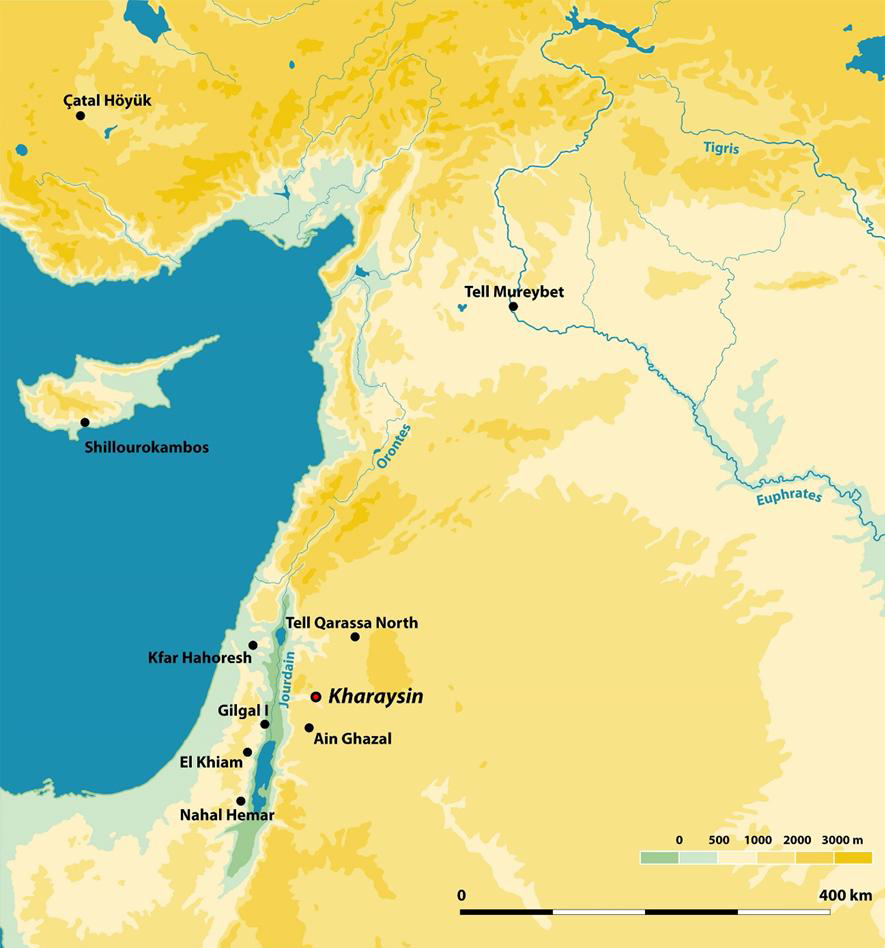
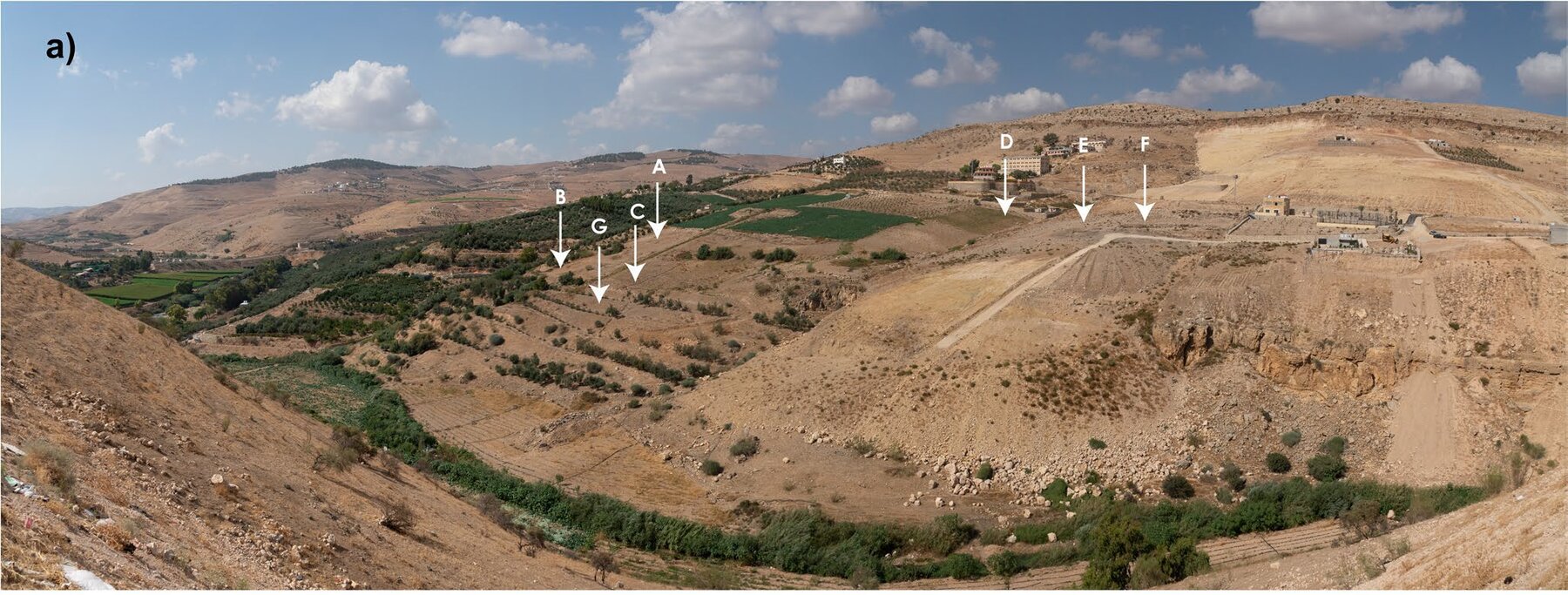
The settlement sits on private agricultural land in the village of Quneya. Out of respect for the landowners and for the protection of the site, this website does not publish exact coordinates.
Where hunter-gatherers became farmers and herders, and built some of the first houses in the world.
Kharaysin, Khuraysān in its original Arabic name, lies about 40 km north of Amman, in the governorate of Zarqa, on a series of south-facing natural terraces between 430 and 470 m above sea level, at the foot of Jebel al-Mutawwaq, beside a spring and a small tributary of the Zarqa River. The valley is one of the great natural corridors of the southern Levant, linking the Jordanian highlands with the Jordan Valley and the eastern steppe. People, raw materials, techniques and ideas moved along it.
The settlement was occupied from the end of the Pre-Pottery Neolithic A, around 9100 BC, to the Pottery Neolithic, around 6300 BC, with one long interruption before the last return. Few sites in the Near East preserve so much of this sequence in one place: the first oval huts, the first rectangular houses with lime-plastered floors, planned rows of houses with streets, cremations and skull removal, flint figurines, and the slow turn from gathering and hunting to lentil fields and goat herds.
The site was first recorded in 1984 by J. W. Hanbury-Tenison and P. C. Edwards during the Jarash region survey. Juan Antonio Fernández-Tresguerres sounded it in the 1990s within the Spanish mission at Jebel al-Mutawwaq. Since 2014 a Spanish project led from the Milà i Fontanals Institution of the Spanish National Research Council (IMF-CSIC) has excavated it every year in partnership with the Department of Antiquities of Jordan: Zones A to D between 2014 and 2022, Zones E, F and G from 2023.
Choose a period to see how houses, food, animals and beliefs changed at Kharaysin.
Twelve years of excavation: the seasons, then the stories. Click a card to read more.
Drag or scroll sideways. Every autumn since 2014, a few weeks on the terraces of Quneya.
An interdisciplinary team from Spain, France and the United Kingdom, with the workers of Quneya who have dug with us season after season.
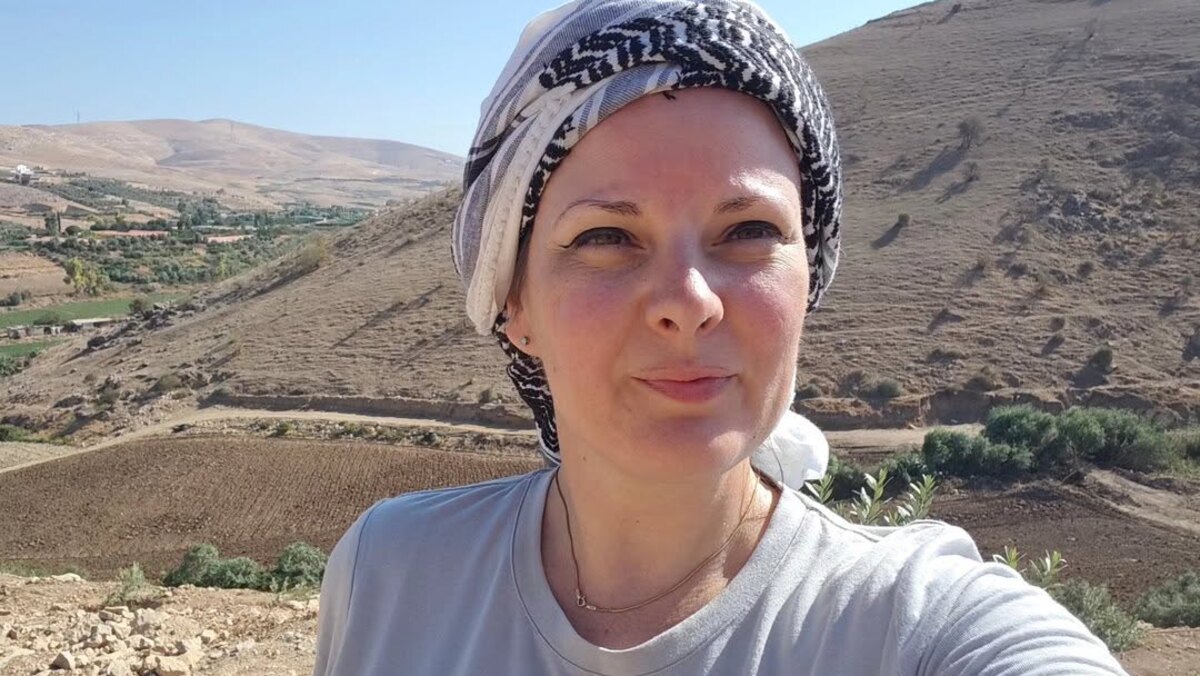
IMF-CSIC, Barcelona. Lithic technology and use-wear analysis. Co-director of the excavation from 2026, Marie Skłodowska-Curie fellow (NEO-IDENTITY).
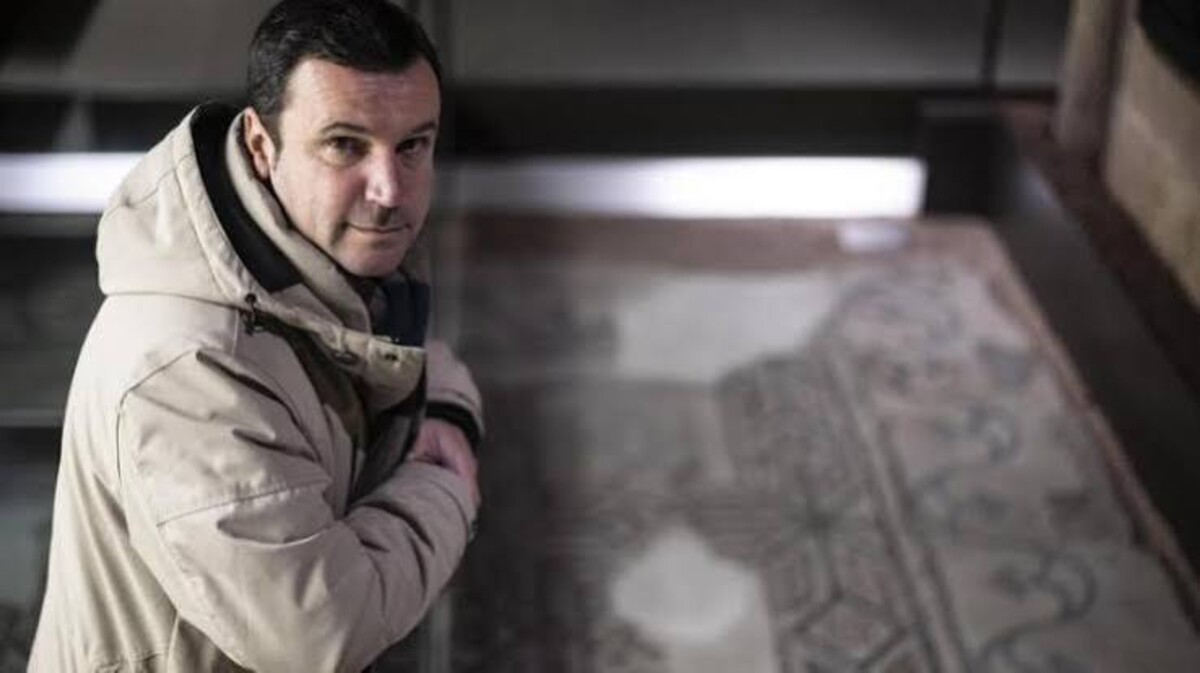
Pontificia Facultad de San Esteban, Salamanca. Co-director of the Kharaysin excavation since 2014 and of the Jebel al-Mutawwaq project.
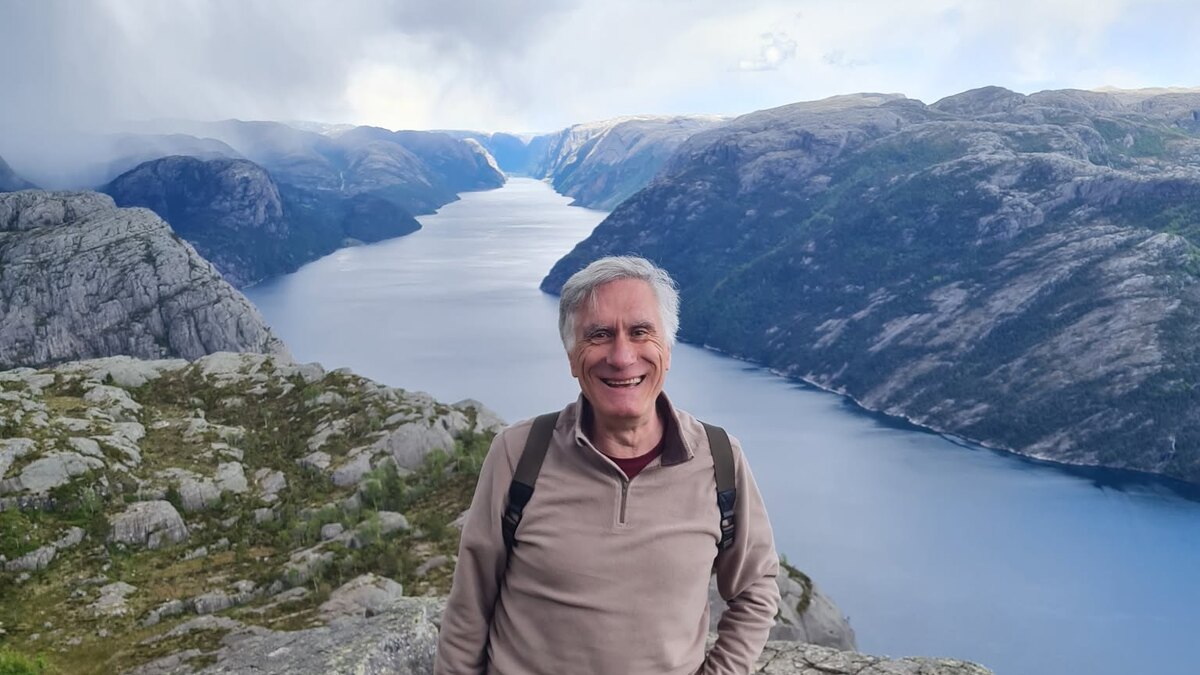
Research Professor, IMF-CSIC. Directed the excavation for eleven seasons and continues as scientific collaborator and principal investigator of the Spanish research project.
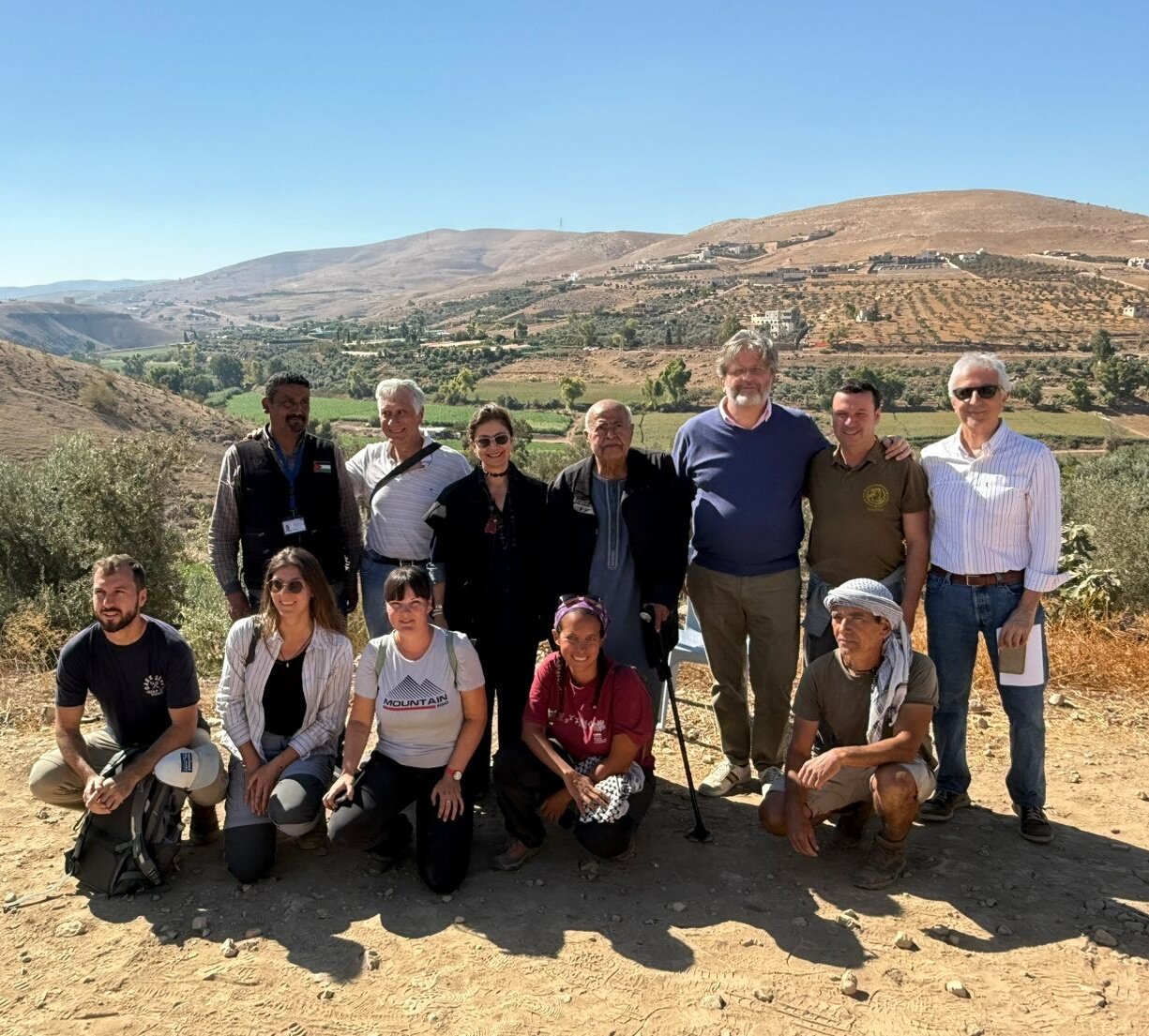
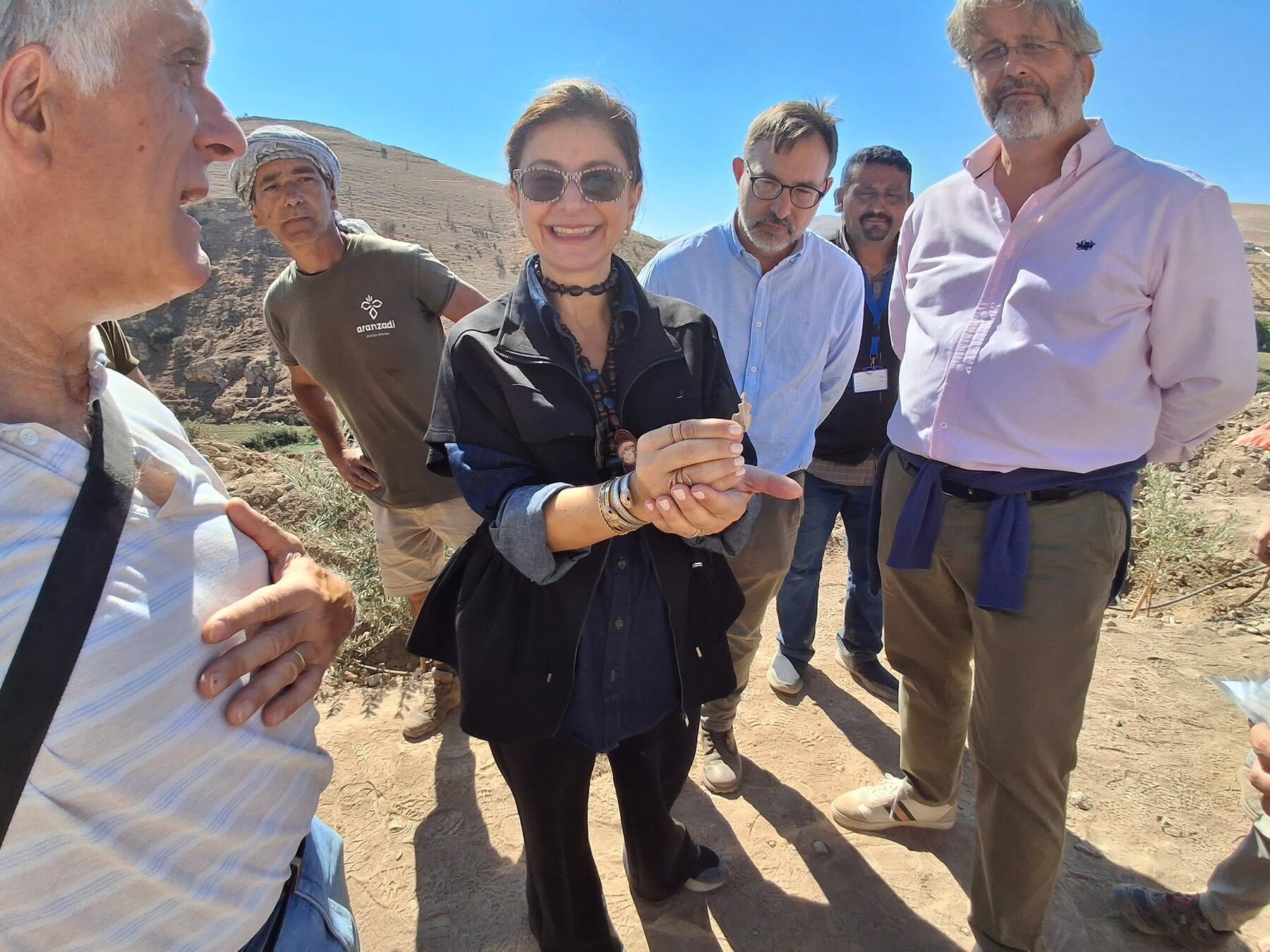
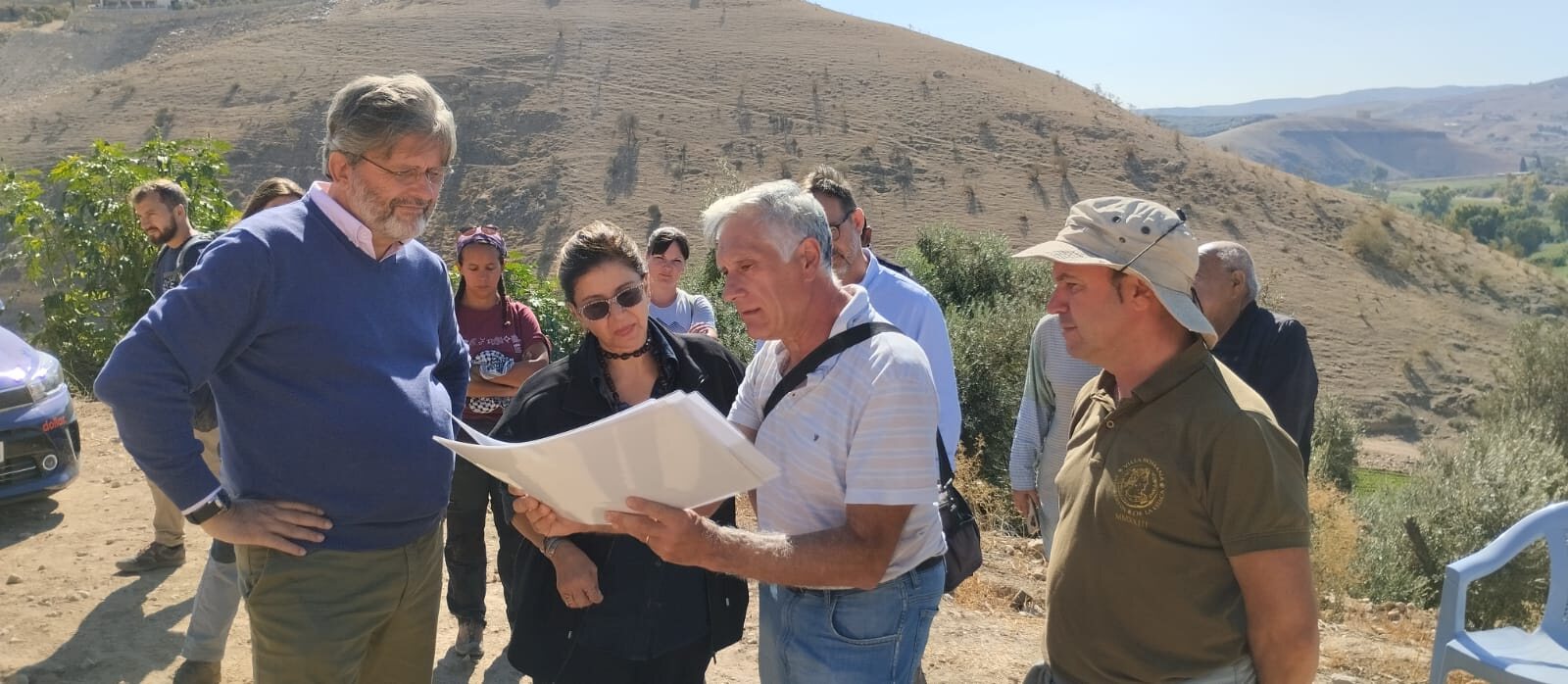
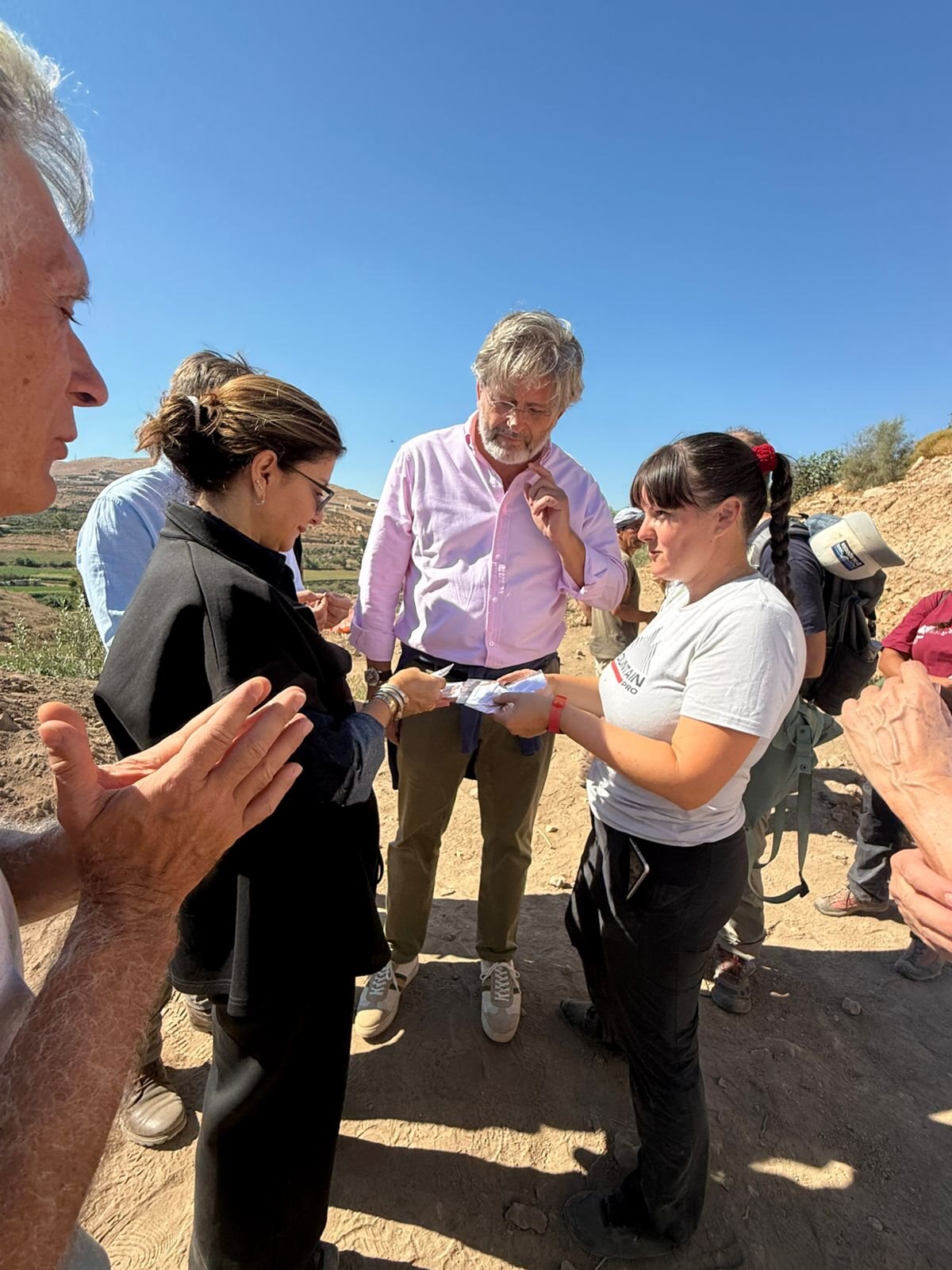
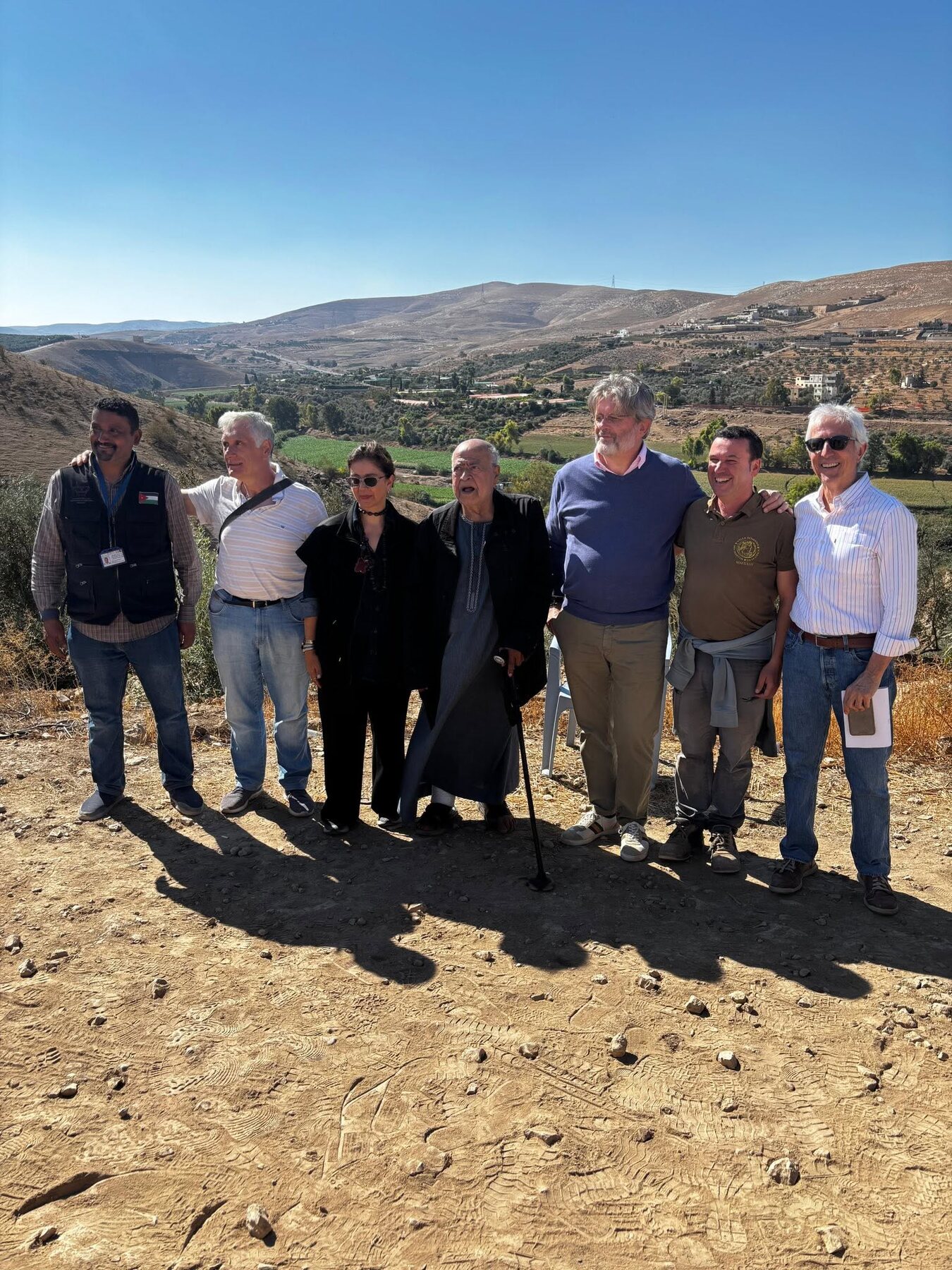
The Ambassador of Spain, Miguel de Lucas, and Princess Dana Firas visit the Kharaysin excavation.
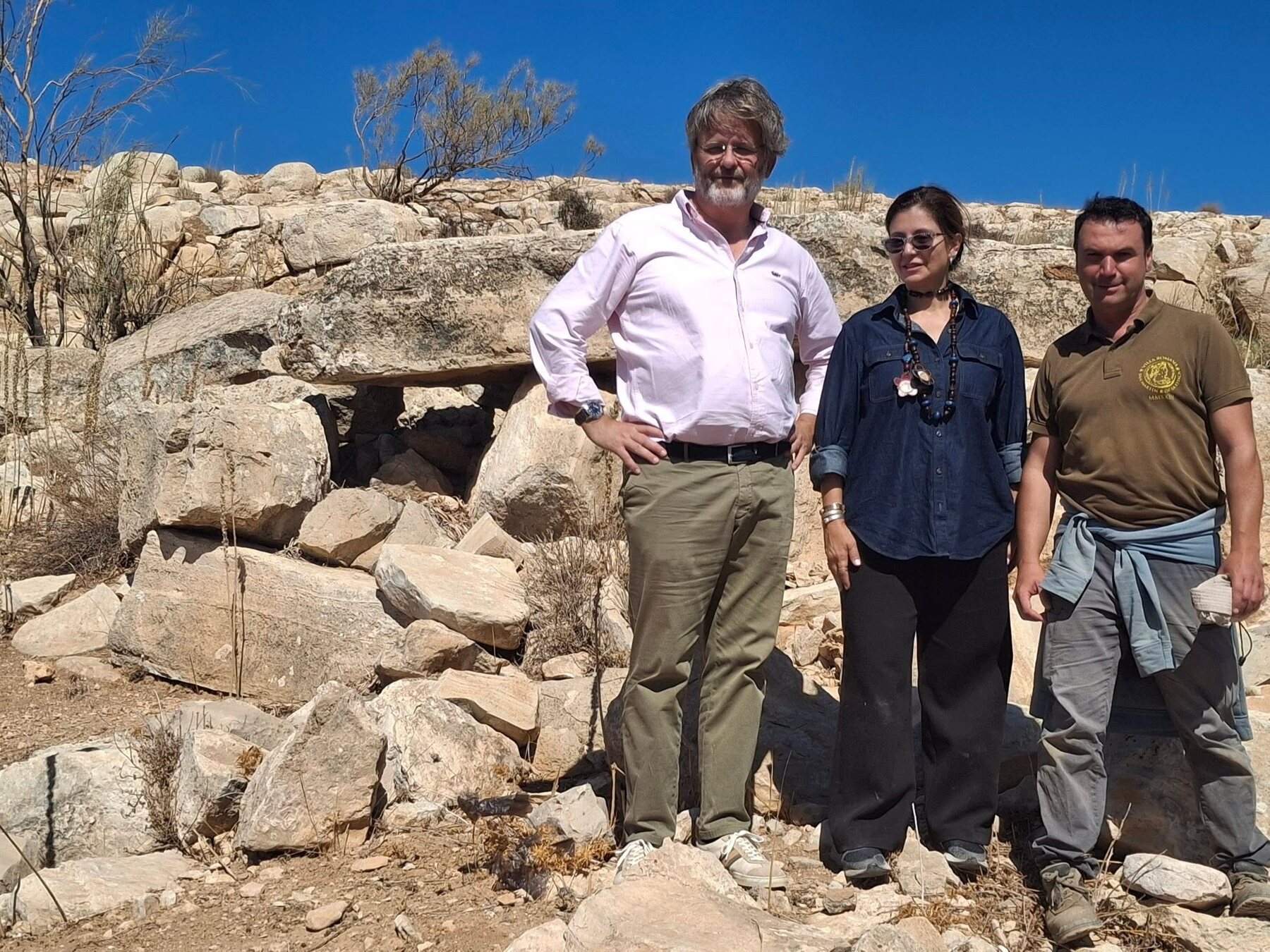

Kharaysin is a Spanish public research project carried out under permit of the Department of Antiquities of Jordan, with the support of public, European and private funders.
Our thanks also go to the Ziadat and Zyud families, owners of the land on which we work, and to the village of Quneya.
Every September we go back. Follow the season on social media, come to our annual lecture at the Instituto Cervantes in Amman, or write to us.